

II
Gunnhild and her sons thus carried out their plan and went in search of Astrid.
AD 963
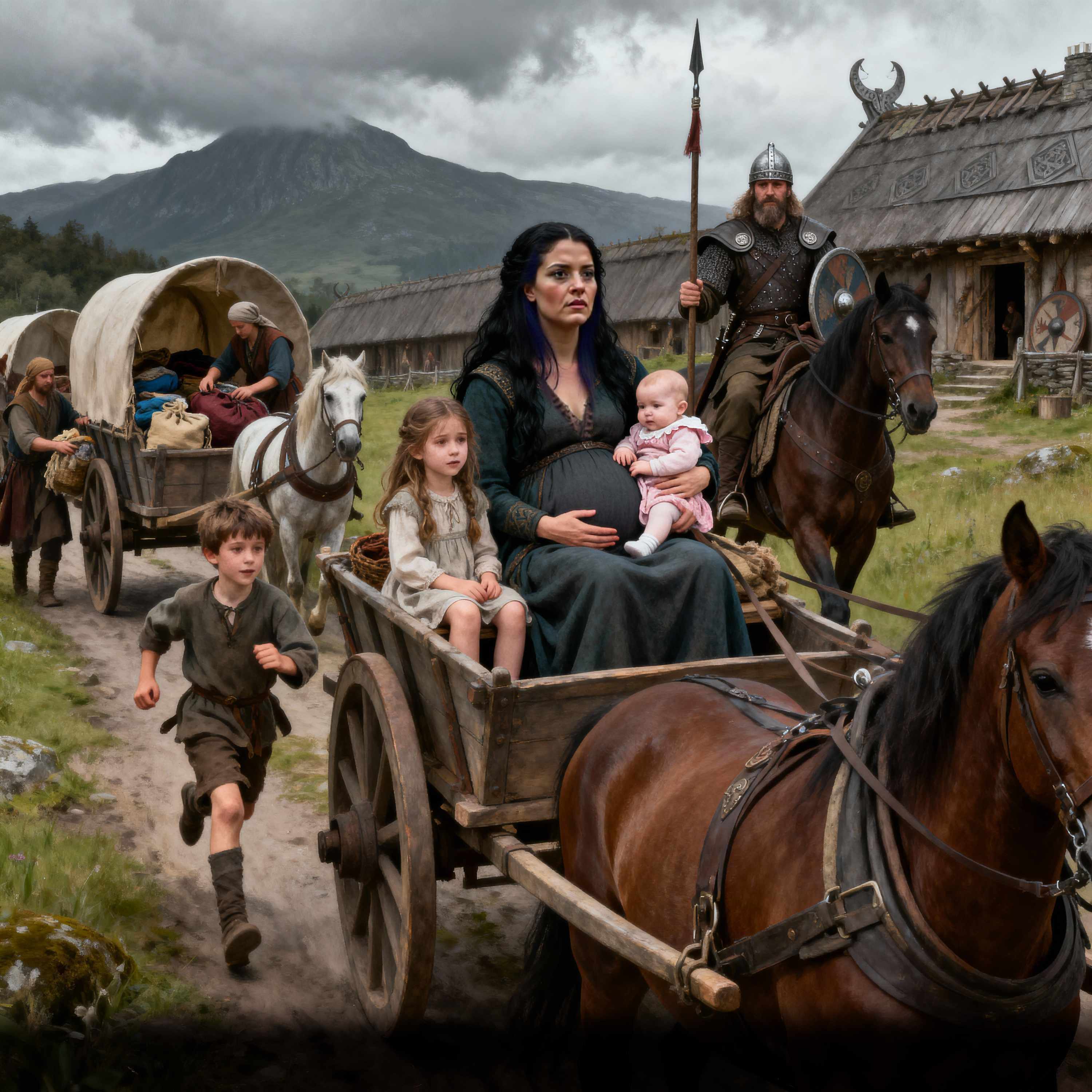
Word of King Tryggvi’s murder reached his queen Astrid before his killers could. Gudrod’s heralds, themselves betrayed, on leaving his service must have gone straight to Tryggvi’s farm to warn her: The supposed split between the sons of Bloodaxe had been a ruse. As Berg put it, “The quarrel was only a trick by the brothers, which their mother Gunnhild had planned, so that, appearing to be at odds with one another, they would not be suspected of the treachery which they had planned together, and afterwards carried out.”* Greycloak and Gudrod met up, combined their forces, and took on Tryggvi’s surviving men. With the king of Viken out of the way, and adding his ten shiploads of men – or, at least, those who submitted – to theirs, the Eirikssons might well conquer all of Norway, but only if they eliminated all rivals, including those as yet unborn. Among Vikings, killing women or children was considered shameful, the act of a weakling – unless, perhaps, commanded to the deed by one’s overlord, or goaded by a royal mother. In those days, however, one murder often led to another, blood justice. A common plot in medieval Norse ballads is that of he who carries out the ancient law of an eye for an eye, slaying his kin’s killer. (In some songs it’s the daughters who exact retribution; wives and lovers are equally justified.) Gunnhild and her sons clearly had no qualms about murder, but not even kings were safe from blood vengeance. As the brothers saw it – as Gunnhild saw it – the job would not be finished until Astrid and her entire family had joined her husband in the grave. Tryggvi had taken his housecarls, the family fighting men, along to go on Gudrod’s supposed raid. Any who refused to serve the Eirikssons would have been put to death. The rest were Gudrod’s men now – Greycloak’s men, Gunnhild’s men – and they were all coming for Astrid. She could not trust that the survivors would remain as loyal to her commoner’s blood, or her daughters, as to their late king. She could not stand against them. She could only run. Pregnant as she was, she could not make the trip alone, but was accompanied by a few servants, her girls Ingebjorg and Astrid and her fostri, her foster father, Thorolf.* Thorolf bore a rather unflattering nickname, Lusarskegg, “Licebeard” (but give the man a chance, that could have been the result of one unfortunate incident he never lived down). In the sagas he is devoted to his foster daughter, despite having a six-year-old son of his own, Thorgils, whom he did not leave behind. 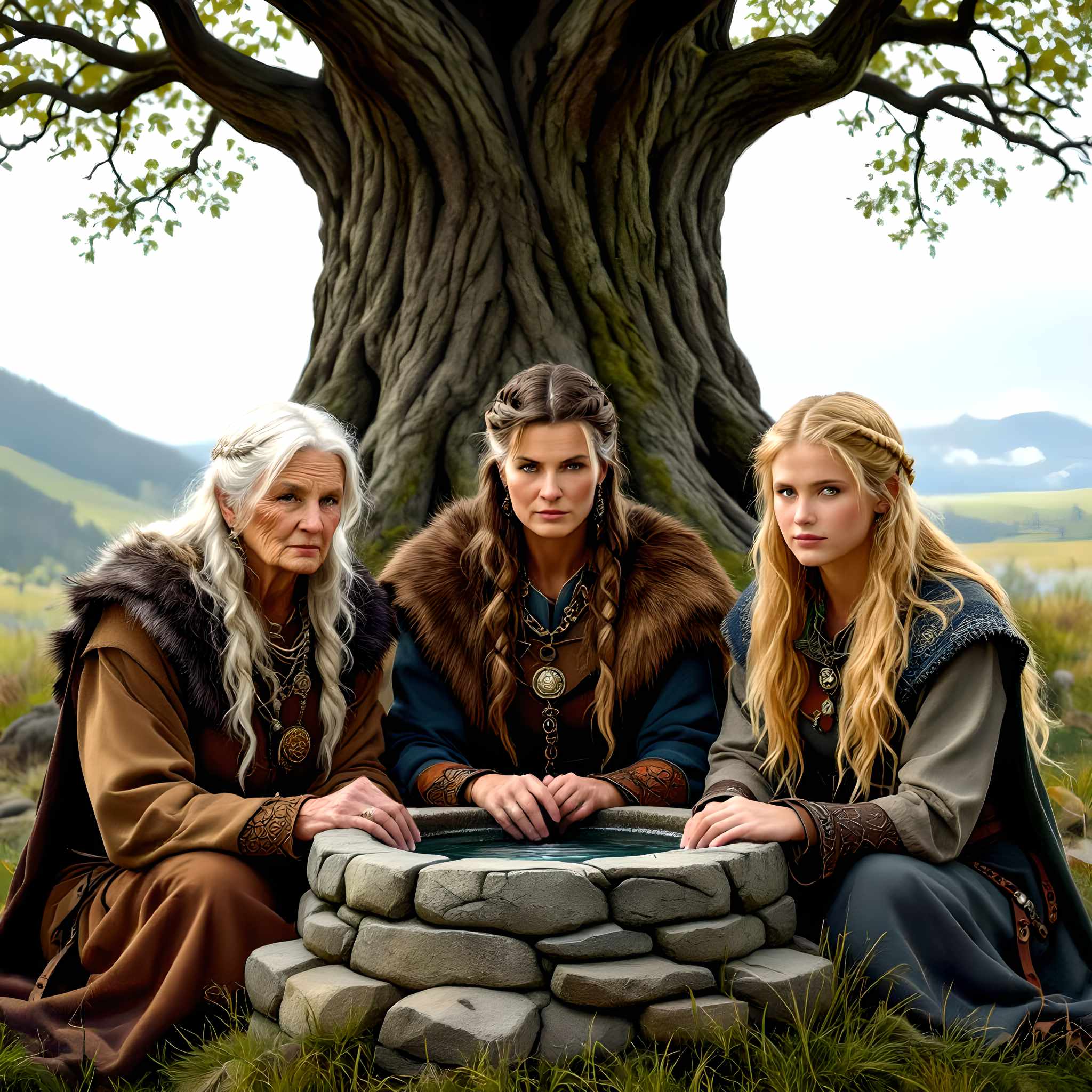
The Norns – Urth (Past), Verthandi
(Present) and Skuld (Future) – wove men’s fates from birth, With the family goods loaded up, the procession set off, bound for her father Eirik’s farm on the west coast, some 250 miles away. As queen, and with her time near, Astrid would have been put on any available cart or horse. By this time Christianity had been known in Scandinavia for the better part of a century and a half, and she must surely have heard tell of the Mother Mary, who had ridden a donkey from her home carrying her unborn child to flee royal persecution. Astrid was not long gone when Greycloak and Gudrod arrived at her farm. They could learn nothing of her whereabouts, but confirmed she bore Tryggvi’s child. They could not pursue. For Bloodaxe’s sons the conquest of Norway was a higher priority than a woman bearing a dead man’s unborn whelp. Probably the Norns – the three otherworldly sisters representing Past, Present and Future, who lived beside the Well of Fate at the foot of the World Tree and wove men’s destinies – would solve the problem for them. In those days of disease and malnutrition almost a fifth of all infants were stillborn, and only half the rest lived beyond the age of seven. 
Contrary to depictions in modern media, which tend to follow aristocrats living in relative luxury off the hard work of the mundane, uninteresting lower classes, life in Viking Scandinavia wasn’t all raiding and revelry. In those days not even ten percent of Norwegian land was arable, or really even habitable. There were few towns, nor even what we would call villages, just scatterings of small, outlying farms around big landowners’ halls. By far most people lived in what today would be considered unimaginable poverty: several families, along with their servants, farmhands and thralls (servants, slaves) – perhaps ten to twenty people in all – plus their farm animals, all jammed under one roof, in a smoke-filled longhouse, a firetrap of wood and thatch with a floor of packed dirt. It was just such hardship, however, that had forged them into the toughest people in Europe. The 11th century German historian and chronicler Adam of Bremen got no further north than Denmark, but heard, Because of its rough terrain and extreme cold, Norway is the most barren of all nations, suited only for livestock. They graze their cattle like the Arabs, in distant solitude. The people live off their animals by using the milk of the flocks or herds for food and the wool for clothing. This makes them very valiant fighters, unsoftened by too much fruit, who attack others more often than they are attacked.... Poverty has forced them to leave home, and from pirate raids they bring home in great quantity the wealth of other lands. In this way they overcome the emptiness of their own land. 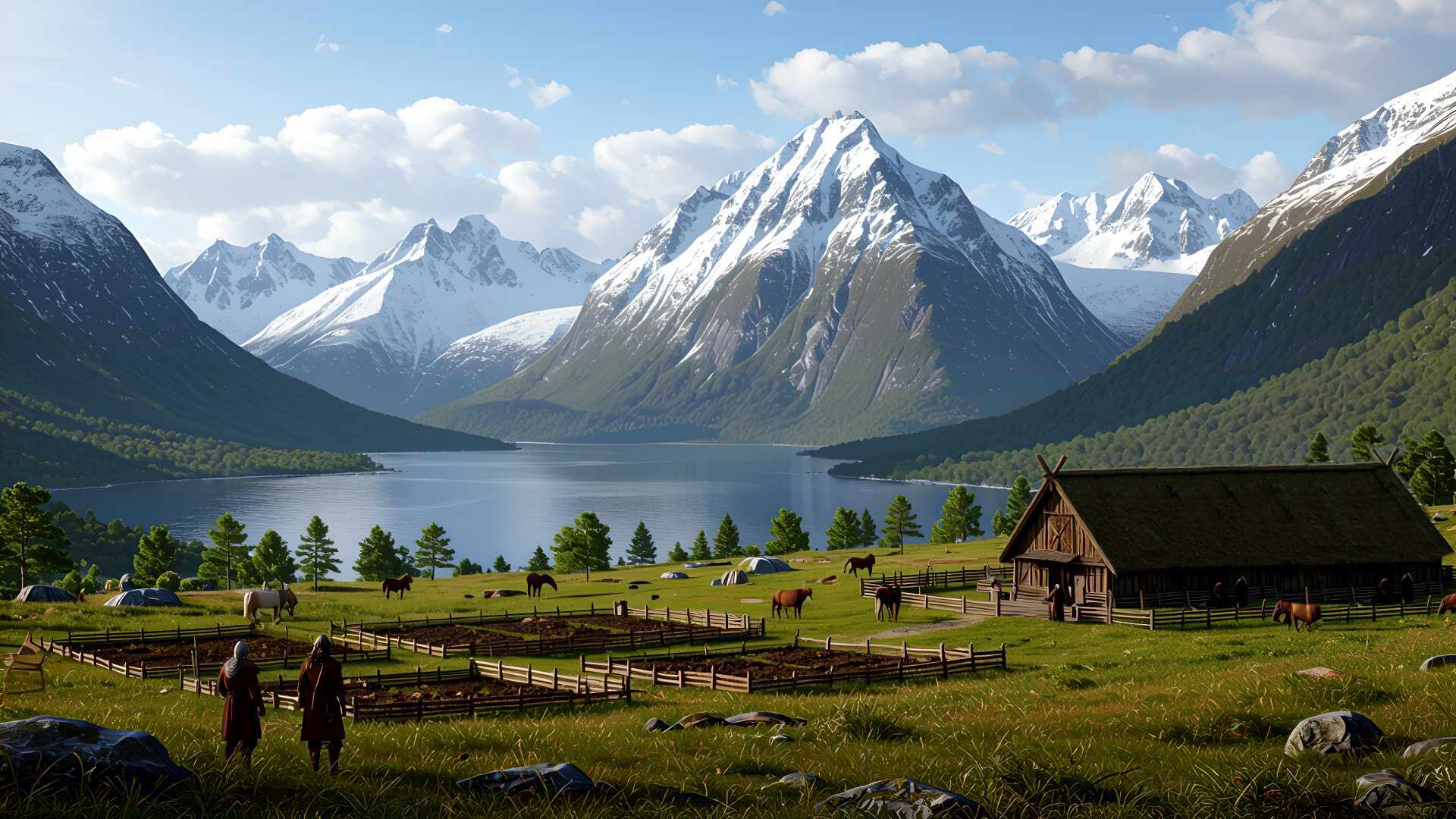
To survive required hard work of men and women alike, yet it was not without reward. This was the era of the Medieval Warm Period, of favorable climate across Iceland and Northern Europe. (On the far side of the North Atlantic there were up to five thousand people or more thriving in Greenland.) As spring turned to summer the sunny fields would have been growing thick and high with barley, rye, wheat and buckwheat, and garden plots with beans and peas, onions and angelica, hops, parsnips and wild carrots, cabbage and garlic. That said, these were Vikings; with the field work done until harvest time, many menfolk went away for the raiding season, and this summer many would be fighting either for or against the sons of Gunnhild. It was through this world that Astrid and her party made their secretive way, westward, passing as commoners, mingling as little as possible any locals who might betray them. Thorolf and the children stayed at their queen’s side, but she ordered the rest to spread out to learn whatever they could of Gunnhild and her sons. As expected, those were conducting something of a pogrom, a purge against anyone who had stood against them or was likely to. Greycloak surprised Tryggvi’s cousin, King Gudrod of Vestfold, at a banquet in his capital of Tunsberg, modern Tonsberg on the banks of the Oslofjord, and slew him along with many of his men. They would doubtless have murdered Gudrod’s son Harald as well, but he had already escaped to Sweden and would ultimately go as far as Greenland to escape their reach.* Gunnhild was determined to not let Astrid likewise slip through her fingers, but her sons found nothing but rumors. As a skilled volur, sorceress, the queen would certainly have consulted Freyja, goddess of fertility, who had taught the Vikings’ tribal ancestors, the semi-mythical Aesir, the ways of magic, and would surely have revealed any knowledge of a pregnant woman on the run. “The rumor is likely true,” Gunnhild announced of Astrid, “and she will raise a son of Tryggvi’s if nothing is done to stop her.”
“Astrid, now in hiding and in mourning,” wrote Odd, “realized that she was soon going to give birth, when they came to a lake called Rond.” 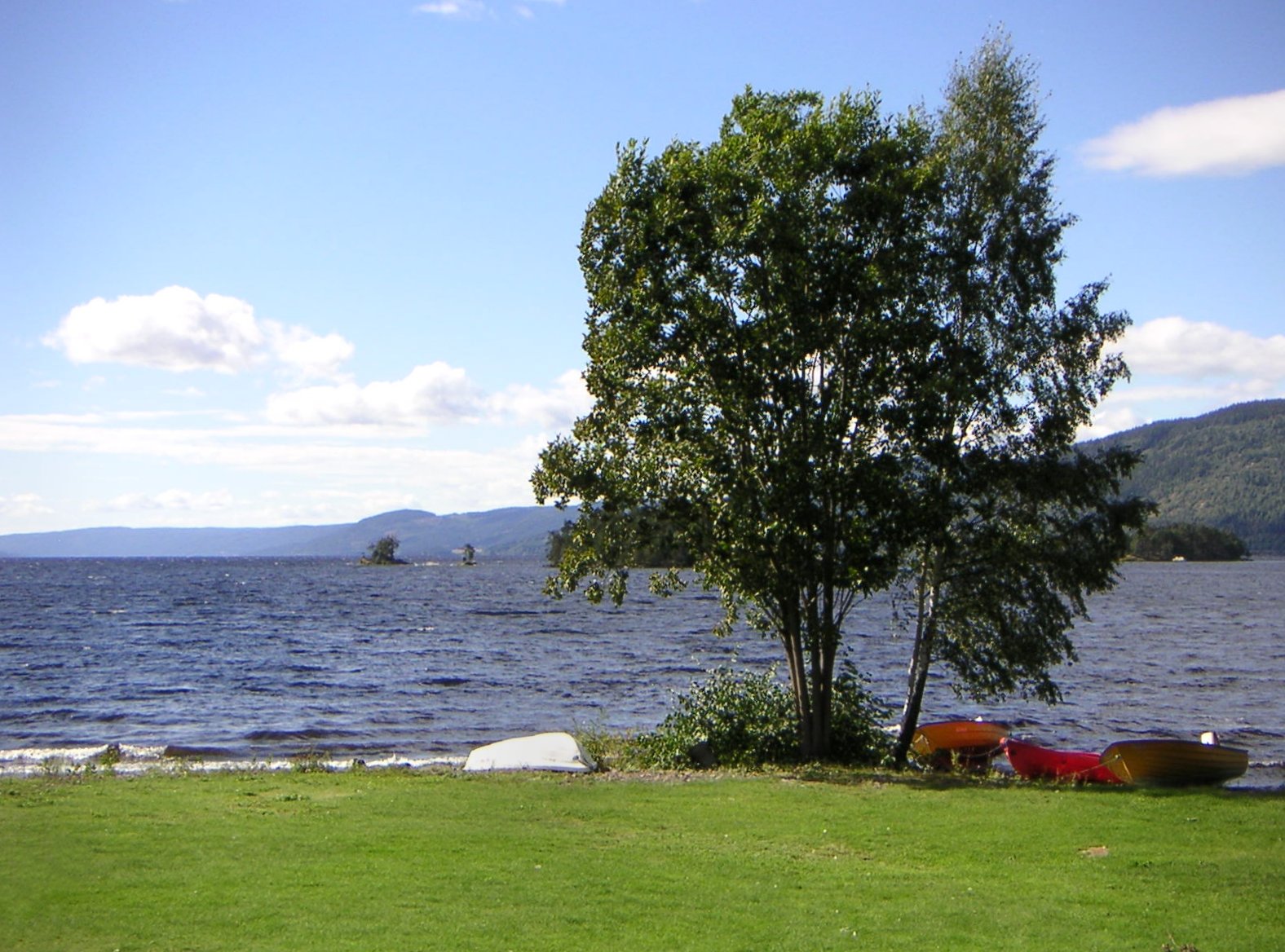
Randsfjorden That’s the medieval name for today’s Randsfjorden, not a saltwater fjord but a landlocked, freshwater finger lake, Norway’s fourth-largest.* A flooded valley running roughly north-south some forty miles between mountain ridges, it lay astride the fugitives’ path to safety in the west, but at its widest is less than two miles across, an easy boat trip on a summer’s day. 
Viking naverstad Astrid, however, could go no further. According to the sagas, she and her party took shelter in a naverstad, a boatshed on an island in the lake. (Vikings valued their ships so highly that to house them over Scandinavian winters they built special shelters, themselves looking somewhat like overturned boats, some so large that in summer they could double as feasting halls.) There are still a few islands just off Randsfjorden’s southeastern shore, secluded enough that from within the walls of a naverstad the cries of a woman giving birth might not be heard from land. Astrid’s foster father Thorolf Lice-Beard could not help her in this. Childbirth was women’s business. The sagas, written primarily by men (and celibate monks at that), give us few portrayals of delivery, fewer still of hard labor, and almost none in which the mother dies. Norse ballads, on the other hand, better represent the feminine experience: that of anxiety, pain, and frequently the death of mother, child, or both. Presumably Astrid retained a qualified bjargrygr, a “helping woman,” a midwife, among her servants. Perhaps a local seidkonur, a priestess, was brought in, for in those days midwifery and witchery were almost the same thing. Spells and incantations, galdrar, were sung, and mystic runes drawn to invoke Freyja and Frigg, goddess of motherhood. It was thought the three Norns attended births as well, to begin spinning the newborn’s thread of fate. 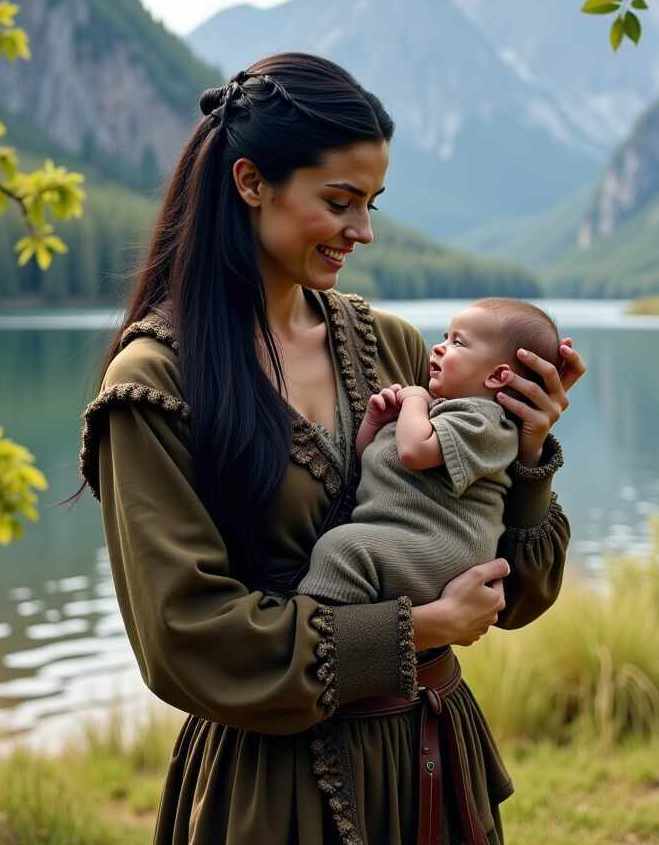
“My son.” Astrid brought forth a boy. As was the custom, he would have been laid on the floor, untouched until the father, or in this case nearest male relative Thorolf, examined him for any abnormalities, to determine if he was worthy of life or should be taken outside and left to the whim of the gods, death by exposure. On acceptance, though by some accounts nine days after the birth, came the ritual of ausa vatni, the sprinkling of water.* Afterward, the infant counted as a person, and death by exposure as murder. Astrid’s son survived. She named him Olaf, after his father’s father, Olaf Digrleggr, “Fat Leg,” son of King Harald Fairhair.* The remote lakeside boathouse was a good place for a new mother and child to recover in seclusion. They would not lack for food. In summertime Astrid’s daughters could go ashore to pick raspberries, blueberries, lingonberries and cloudberries, and Thorolf take his son hunting with bow and spear after willow grouse and ptarmigan, red and roe deer, even reindeer and moose. The Randsfjorden is still famed for its trout, salmon and pike. Well fed in their island refuge, Astrid and her family could believe themselves safe. Snorri confides, “There she hid herself all summer.”

It’s good to be Jarl. With Tryggvi Olaffson and Gudrod Bjornsson dead, the sole remaining opposition to the sons of Gunnhild that summer was Hakon Sigurdsson. News of Jarl Sigurd’s murder had shaken all Norway. Not everyone was ready to accept Harald Greycloak in his place. The Trondheimers came by land and sea to assembly, and proclaimed Sigurd’s son Hakon to be their new jarl. Hakon had everything required of a ruler: ancestry, wisdom and shrewdness, bravery and luck. Odd admitted, “He was very handsome and wise, and in many ways the most distinguished of the nobility. He was also a great warrior.” 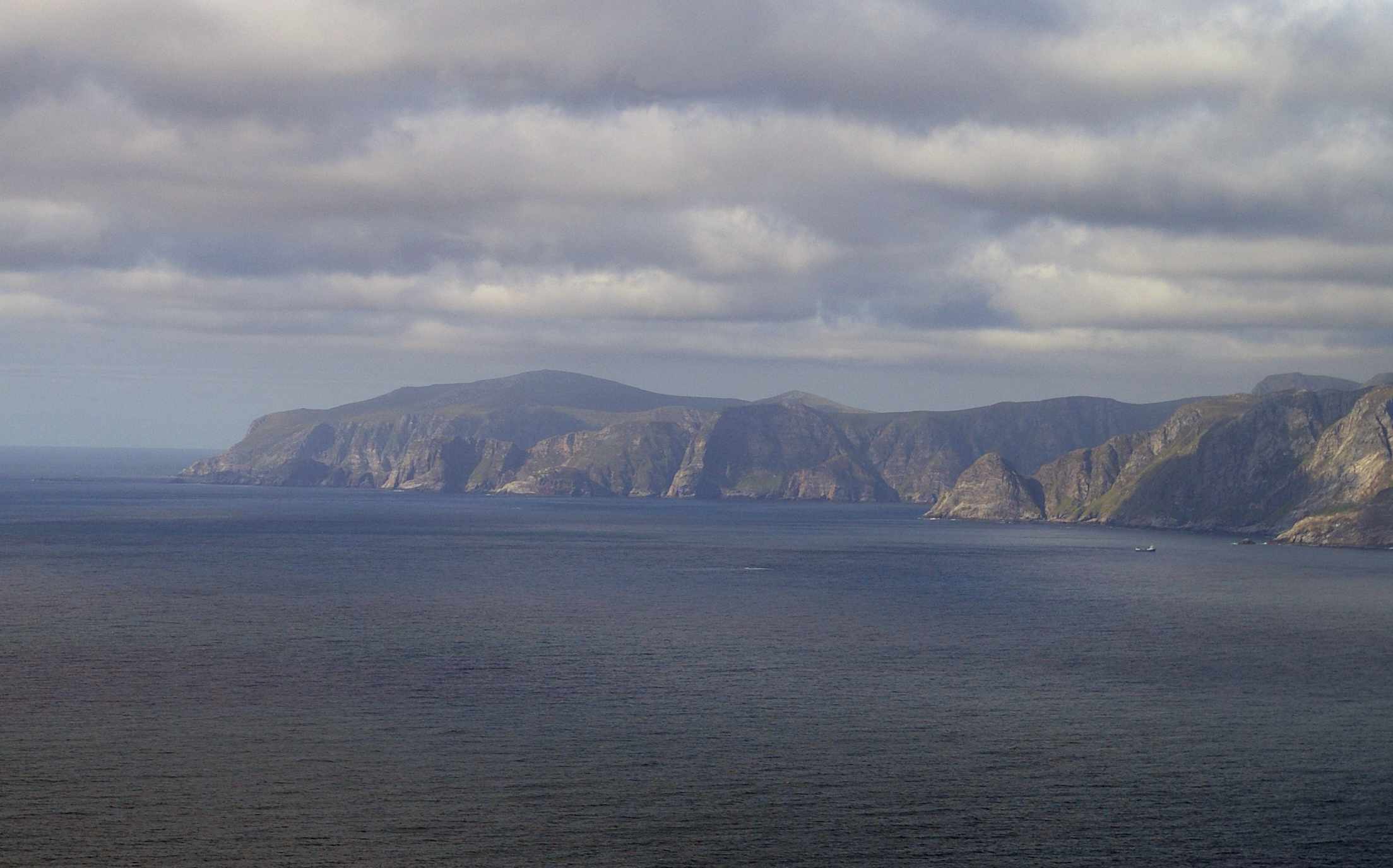
Stad, Norway His struggle with the sons of Bloodaxe would suffice to comprise its own Viking saga. They would not let him stay in power, but he would accept nothing less. He summoned his forces and moved to intercept the brother kings, down on the central Norwegian seaboard, and Greycloak advanced to meet him on the peninsula called Stad. A mountainous, wave-carved plateau that drops steeply from as high as 2,100 feet straight into the ocean, it divides the North and Norwegian Seas, a place of strong winds, hard rains and rough water. Its name derives from the Old Norse word for city, but also from stop or wait, as in for better weather before sailing. This Greycloak and his brothers did, sheltering in the fjords below. Hakon promptly sailed around them, out of sight over the horizon, down through the Skaggerak and into the Baltic. With him gone, the sons of Bloodaxe moved into Trondheim unopposed and made it their de facto capital, extorted taxes and dues from the helpless farmers and villagers Hakon had left behind, and generally acted as though they owned the place, because they did. Norway was theirs, and gained with hardly a fight, only a little treachery and murder. Now Gunnhild could turn her attention to lesser concerns. Odd wrote, “She felt sure that Astrid was with child, and believed that spelled danger for herself and her sons.”

“When nights grew longer and days shorter, and the weather cooler,” wrote Snorri, “then Astrid and Thorolf set out with a few others, only moving through settlements at night when they could go hidden, meeting no one.” We can assume they resumed their trek as soon as possible. The most direct route from Randsfjorden to her father’s estate at Obrestad was up over the highest part of the Scandes, the Scandinavian Mountains, what the Norwegians call the Kjolen, the “keel” of Norway. In that southern part of the country the mountains split into separate ranges riven by deep valleys, with much of the highlands above the tree line and several peaks over a mile above sea level. Part of the reason Norwegians clustered along the coasts and became so adept at sea travel was so they could sail around, rather than having to hike over, that rugged, barren, largely uninhabited Upplond, the “upper land.” Astrid’s party most likely went down to Oslofjord and hired a boat to take them around the coast of Sorlandet, the “Southland,” to her father’s farm on the southwest coast. As a stormann, a man of means, Astrid’s father Eirik (called Bjodaskalle, Bald Head) led a life not unlike his queenly daughter’s, with more authority, responsibility, privilege and comfort than the average Viking Age peasant, less manual labor but more overseeing that of the farmhands and thralls living on and around his property, looking after his crops and animals. Adam of Bremen testified, “In much of Norway and Sweden cattle herders are men of the highest rank, living like patriarchs by their own hard work.” In addition to his longhouse or hall, Eirik’s estate would have included a separate barn and stables, a cookhouse, brewery, workshop, smithy and more – plenty of room for Astrid, Thorolf and their children, even considering the necessary discretion. According to the sagas he lodged them in an outbuilding and saw to their provisions himself. Few of his workers even knew they were there. 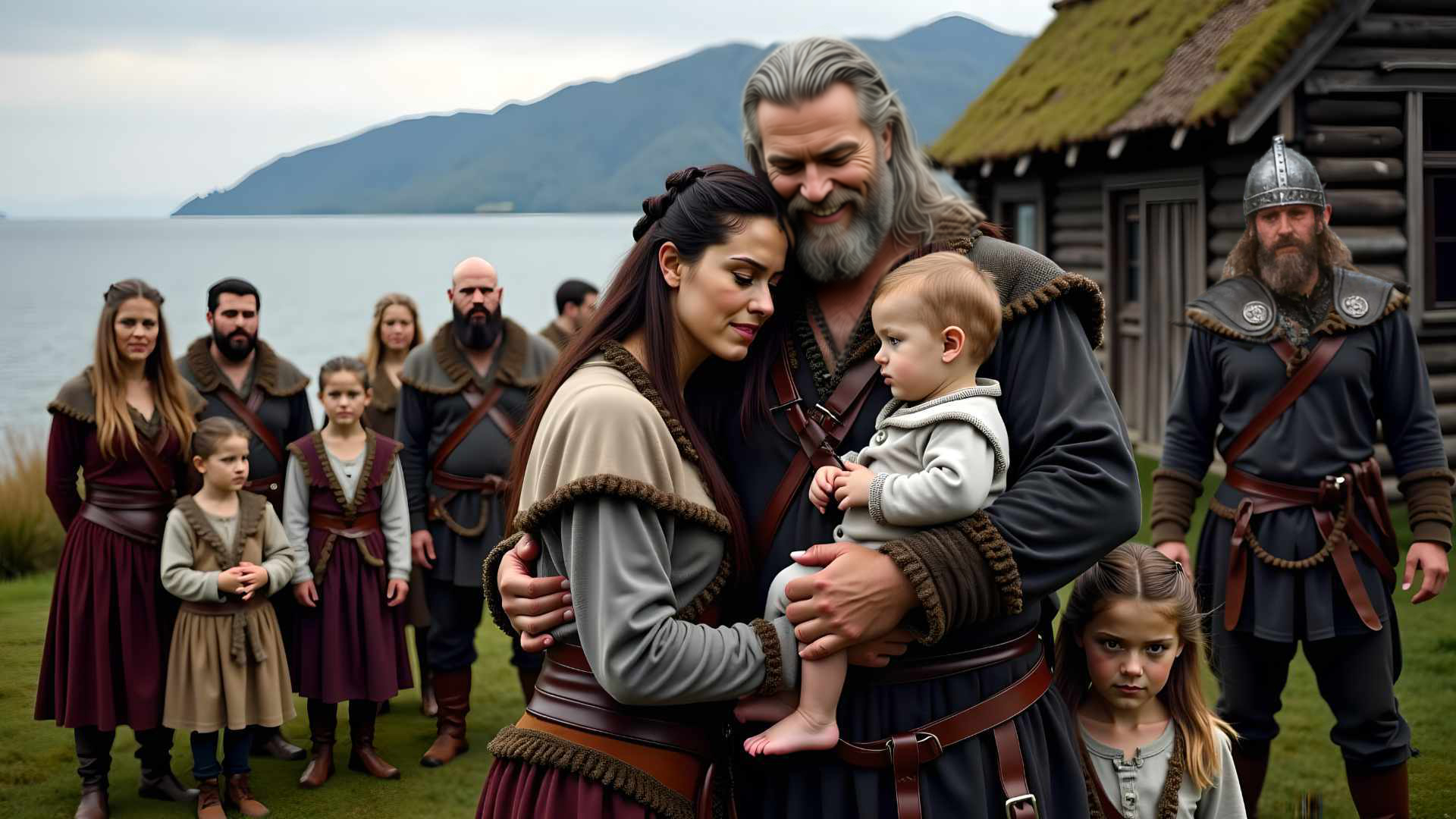
“My family.” In those days of such high death rates that a third of all people never reached adulthood, and half of all men and a third of all women never made it past thirty, folk counted themselves lucky if they lived to see grandchildren. No mention of Eirik’s wife, Astrid’s mother, is made in the sagas, but Astrid had several elder brothers, Sigurd, Jostein and Thorkell dyrdill (“Short Tail” or “Hanger-On,” as little brothers are apt to be known). Snorri attested, “They were all men of rank and wealth, living in the lands to the east.” Of them we know Sigurd, the eldest, had left home to fight as a mercenary across the Baltic, a lifestyle not exactly conducive to a stable family life, nor to keeping in touch with home. Eirik had probably given up hope of knowing the fate of his progeny. Now here was his old friend Thorolf, having raised his daughter and brought him three grandchildren besides. Safe at last, Astrid released her retainers to go their own way. Thorolf Lusarskegg, his son Thorgils, Astrid’s daughters and of course little Olaf remained. Snorri wrote, “And they stayed there all winter.”
Between bickering with Jarl Hakon and trying to control their new kingdom, Gunnhild’s sons were too busy to hunt for Astrid that winter. They split up. Greycloak returned south to rule there, leaving Gudrod and Gunnhild up in Trondheim. News of this divide soon spread over the mountains to the Swedish side, where Jarl Hakon had landed his fleet on the Baltic coast. Although he could not hope to defeat both brothers and their combined armies, he might well defeat one of them. That autumn he left his ships and marched his force over the Kjolen, farther north than Astrid would have crossed, where the going was a little smoother. On his arrival back in Lade his former subjects, wearied of the Eirikssons’ domineering ways, welcomed him home and flocked to his banner. Taken by surprise, Gudrod hastily abandoned his throne, took to his ships and retreated down the coast to More. Hakon did not pursue, contenting himself to have regained his jarldom. The two sides proceeded to annoy each other all winter, making sporadic attacks and killing each other’s men as the opportunities arose. While her sons were busy with Hakon, Gunnhild was still obsessed with finding Astrid and her newborn son. The next spring, AD 964, she sent spies south to find them. They returned with no news except that Astrid had to be at her father’s estate. The Mother of Kings had two problems – Jarl Hakon and Queen Astrid – and it occurred to her to solve them both at once. “She summoned Hakon Sigurdsson and spoke harshly to him,” reports Odd.* “She said he deserved death for his treachery against her sons, the same as King Tryggvi. She said he was guilty of disloyalty in their business and that his only chance was to bring her the boy Olaf, who had wintered with Eirik at Obrestad.” Though he had no personal axe to grind against Tryggvi’s widow or his children, their deaths would be a small price for peace with Gunnhild and her sons. Gunnhild supplied him and thirty men with horses and weapons and bid them on their way. She would have done better, though, to send a smaller, more discreet team of nameless assassins, for news of the approach of the mighty jarl and his retinue preceded them. Eirik awoke Astrid and Thorolf: “Gunnhild’s sorcery has revealed that you are hidden here, and I wish to avoid your capture. Hakon Sigurdsson’s henchmen are nearby, and will be here today.” He gave them beggars’ clothing as disguises, and guides with instructions to take them east to Sweden, to see one Hakon Gamli, The Old: “We are old friends and raided together. Since those days we have concealed and protected men with each other. You will be safe there.” Father and daughter had to know they would never see each other again. According to the sagas, they embraced before he bid her go, and quickly, for little Olaf’s life was on the line: “I think Gunnhild and her sons wish the boy to suffer the same fate as his father.” 
The Historiae claims Astrid and her party departed aboard three ships bound for the Orkney Isles, which might have been a cover story. (It also claims she was still pregnant and gave birth to Olaf there.) On the other hand, Odd and Snorri agree that Astrid, Thorolf and Thorgils made a day’s march overland, headed east. Astrid’s “serving girls,” little Astrid and Ingebjorg, must have stayed behind, as for the time being they vanish from the saga. Girls being not so important in royal successions, they may not have been on Hakon’s hit list. Meanwhile, early in the morning Hakon and his men came searching for Astrid. Odd would have it that the jarl got downright belligerent with Eirik, accusing him of hiding her and her son over the winter. As a stormann, Eirik had the right to carry weapons and retain his own household guard, but knew better than to draw sword on a jarl. He admitted they had been there, but – truthfully – said they were gone. Hakon and his men spent the day going over the house and grounds, finding nothing, but towards evening they received word of her. At their first stop, a rich man’s hall, Astrid and her party had been driven away as beggars, but a local villager had given them shelter for the night. Stopping at the same hall, Hakon and his men learned they could probably still find her in the village in the morning. Again, however, word of their arrival went ahead of them. (There was evidently little sympathy among southerners for Gunnhild and her sons.) Astrid’s host woke her in the middle of the night and sent her and her people to hide on an island in a nearby lake, and when Hakon and his men arrived in the morning, led them on a wild goose chase. Jarl Hakon was forced to go home empty-handed to face Gunnhild. That night the villager provided Astrid and the fugitives with provisions and a guide to take them the rest of the way east to Sweden, and safety. But not for long.
REVIEWS:
Hollway pieced together Olaf’s biography from numerous and often contradictory sources. He does a masterful job of fitting the pieces together to form a coherent picture. The result is an exciting story set in a violent era.
“Hammer of the Gods” is an exciting and engaging read that will introduce readers to a world that seems utterly fantastical, but was surely part of our own. For fans of Viking lore and history, I can hardly recommend Hollway’s new work enough.
Hollway has written a new nonfiction saga...a narrative that is not just coherent, but compelling...a sort of Viking hagiography, a kings-and-battles book that knowingly prints the legend in breathlessly dramatic episodes.
Hammer of the Gods is a veritable Scandi Game of Thrones. Don Hollway is a master at interweaving fact and fable, and this book is the third in his trilogy of Viking bio-dramas. A must-read for all lovers of the genre.
[Hollway] juggles myth, archeology, ancient texts and history without getting bogged down.... Hammer of the Gods: King Olaf’s Viking Conquest, a compendium of all the main sources pertaining to the life one of the world’s most famous Vikings, is in itself a saga—and a highly readable one.
ORDER TODAY:
• OSPREY US •
PUBLICITY CONTACTS:
REPRESENTATION
Scott Mendel, Managing Partner
About the author
Don Hollway is an historian, illustrator, historical re-enactor and classical rapier fencer. For over 30 years his writing on history, aviation, and re-enacting has appeared in magazines ranging from Aviation History, Excellence, History Magazine, Military Heritage, Military History, Wild West, and World War II to Muzzleloader, Porsche Panorama, Renaissance Magazine, and Scientific American. Many of his articles are available free on his website, donhollway.com, where a number of them rank in the top two or three in global search results. He is a member of the Organization of American Historians and the Viking Society for Northern Research in the UK.
More from Don Hollway:
|